Philtrum-to-lower-third ratio
Philtrum-to-lower-third ratio compares the distance from the nasal base to the top of the upper lip with the full distance from the nasal base to the chin. A higher share places the upper-lip border farther down within the lower face; a lower share places it closer to the top.
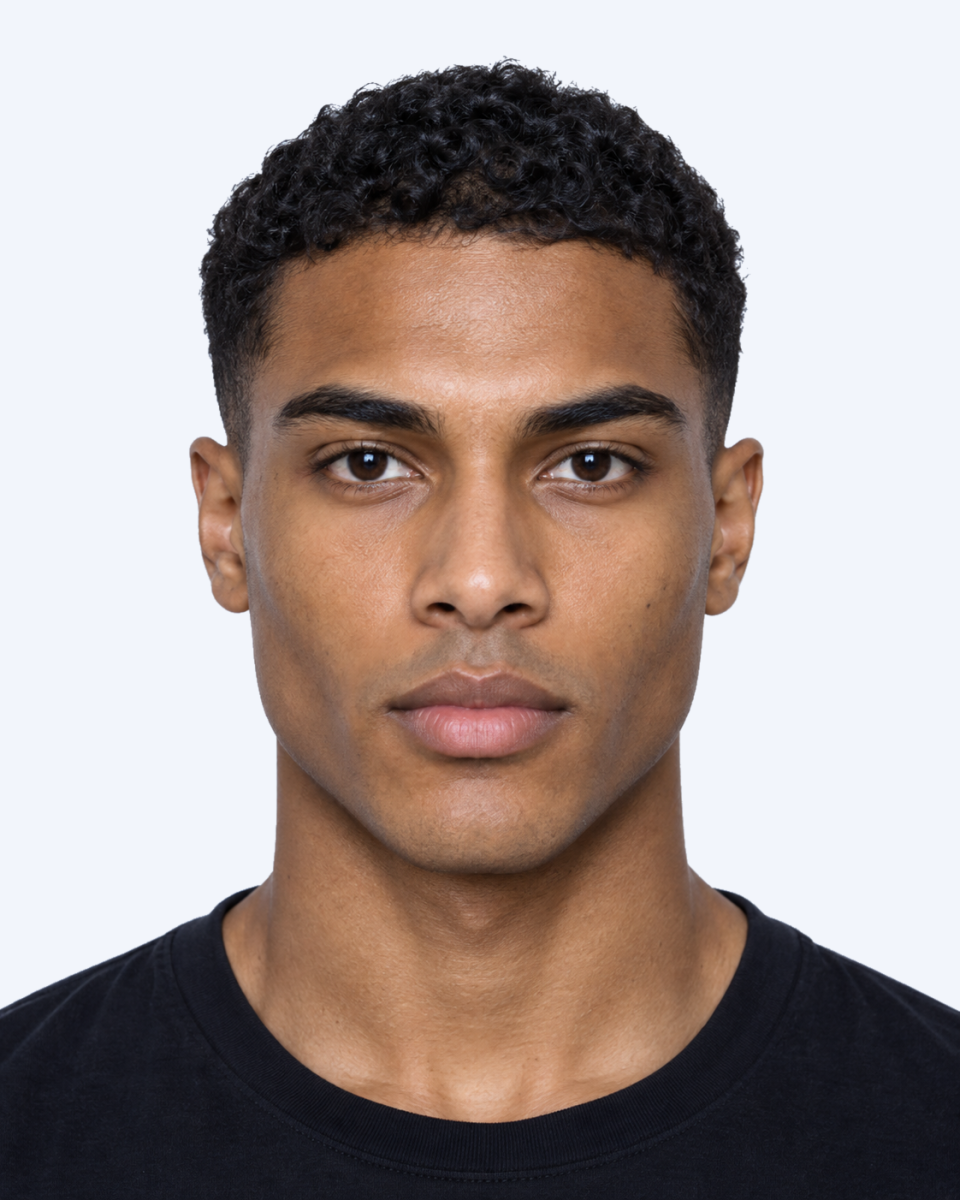
0.19 ratio
Philtrum-to-lower-third ratio
philtrum height divided by the full nose-base-to-chin height.
The marked points show where we measure philtrum-to-lower-third ratio.
What different ratios look like
Compare the examples on either side with the original portrait in the centre.
Baseline comparison
The upper lip within the lower face
The philtrum occupies the skin interval between the nose and upper lip. Its share of the lower third shows how much of the nose-to-chin distance passes before the lips begin. The remaining height contains the visible lips and the chin region below them.
Because this is a share, total lower-face height affects the result. An ordinary philtrum can occupy a large fraction of a short lower face. The same interval becomes a smaller fraction when more height is added below the mouth.
A longer philtrum or shorter lower face
Lengthening the philtrum while the lips and chin intervals stay similar raises its share. The upper lip moves farther beneath the nose, making the intervening skin more visible. More of the lower face is used above the mouth.
Shortening the region below the lips also raises the share while leaving the philtrum unchanged. The mouth may then sit close to the chin because there is little height beneath it. This creates a different appearance from a physically long nose-to-lip interval.
A high share within a long lower face can still leave substantial height for the lips and chin. Compare the full nose-to-chin distance before concluding that the lower region is cramped.
A shorter philtrum or taller chin region
A short philtrum places the upper lip close beneath the nose and lowers its share of the lower face. The nose and mouth form a compact pair, while the remaining space lies within the lips and chin.
Extra height below the mouth can produce the same low share without shortening the philtrum. The lip border sits high within the lower third because the bottom of the face is farther away. A long, narrow chin in this arrangement can make the lower face look elongated despite the low philtrum percentage.
The lips and chin within the remaining height
Chin-to-philtrum ratio compares the interval below the lower lip with the interval above the upper lip. It helps locate whether a low philtrum share accompanies more height at the chin. Chin width then determines whether that height forms a broad base or a slender ending.
The ratios are not exact inverses because the full lower third includes the visible lips, while chin-to-philtrum leaves them out. Taller lips can occupy more of the total even if the surrounding skin intervals stay the same.
Nasal height adds context above the philtrum. A short nose followed by a long philtrum may place the upper lip at a similar level to a tall nose followed by a short philtrum. The total eye-to-lip distance can match while the spacing immediately above the mouth differs.
Philtral contour and perceived length
The central groove and raised columns give the philtrum a visible surface shape. A flatter region can look like a longer uninterrupted area of skin even when its upper and lower endpoints remain fixed.
Nunes and Bran tested altered philtral contours in paired female portraits. Respondents generally preferred defined contours, and removing them made the upper-lip region appear longer and the face older to many observers. The study changed contour, not philtrum height.
Growth and adult changes
As the lower face develops, added height below the mouth can reduce the philtrum's share without shortening the philtrum itself. Ferrario and colleagues documented substantial lower-face growth towards adulthood. The ratio changes according to how that growth is distributed.
In adulthood, reduced visible lip height and changes in philtral contour may make the skin above the mouth more conspicuous. Sforza's lip measurements and Nunes and Bran's contour experiment describe different contributions to that appearance. Comparable earlier photographs help distinguish a longstanding allocation from a later change.
The philtrum-share reference
The 18–24% reference places the upper-lip border around the upper fifth of the nose-to-chin distance. It illustrates vertical placement rather than a preferred interval established for every lower-face shape.
Naini and colleagues found tolerance across a range of chin heights in their experiment. Changing chin height also changes the philtrum's percentage of the lower third, although the philtrum itself stays fixed.
How we measure it
We divide the distance from the nasal base to the top of the upper lip by the full nasal-base-to-chin height.
- 1
Measure from the nasal base to the top edge of the upper lip.
- 2
Measure from the same nasal-base point to the bottom of the chin.
- 3
Divide the first distance by the full nose-to-chin height.
Getting a clear photograph
- Use a straight-on portrait with the camera near eye height and the head upright.
- Avoid close wide-angle selfies; perspective changes central features relative to the facial outline.
- Smiling or lip compression lifts the top edge of the upper lip and changes the ratio.
- Looking up or down changes the visible distance from nose to chin.
Check the marked points
- Check the points at the nasal base, top of the upper lip and bottom of the chin along the centre of the face.
- Place the upper-lip point on its top border, above the closed-mouth seam.
- Retake with gently closed relaxed lips.
Measure your philtrum-to-lower-third ratio
Upload a front-facing photograph to see your result and review the marked points.
Sources
- 1 The Impact of the Philtrum on Facial Attractiveness, Perioral Proportions, and Perceptions of Facial Aging
Manipulating philtral contour changed perceived upper-lip length, age and attractiveness without establishing an optimal measured length.
- 2 Craniofacial growth: a three-dimensional soft-tissue study from 6 years to adulthood
Documents unequal growth of facial regions, including greater proportional growth of the lower third.
- 3 Age- and sex-related changes in three-dimensional lip morphology
Documents age-related changes in lip size and visible vermilion, including declining vermilion-height-to-mouth-width ratios with age.
- 4 Influence of chin height on perceived attractiveness in the orthognathic patient, layperson, and clinician
Shows tolerance of chin-height variation and differences between observer groups. These results cannot be numerically transferred to chin width.
- 5 Glowometry front-view measurement protocol
Explains how the measurement is calculated and which reference range is used.
- 6 Reliability of measurements taken from facial photographs
Documents the effect of photographic setup and landmark placement on facial measurements.
- 7 Focal length affects depicted shape and perception of facial images
Shows that camera focal length changes depicted facial shape, measured proportions and attractiveness ratings.
Related guides

Chin-to-philtrum ratio
The height below the lower lip compared with the philtrum above the upper lip.

Lower-to-upper lip ratio
The relative heights of the lower and upper lips, distinct from their overall fullness.

Facial thirds
The division of facial height between the forehead, nasal region and lower face.