Neck width ratio
Neck width ratio compares the visible neck width with the distance between the back corners of the jaw. A lower ratio means a narrower neck relative to the jaw; a higher ratio means the widths are closer or the neck is broader.
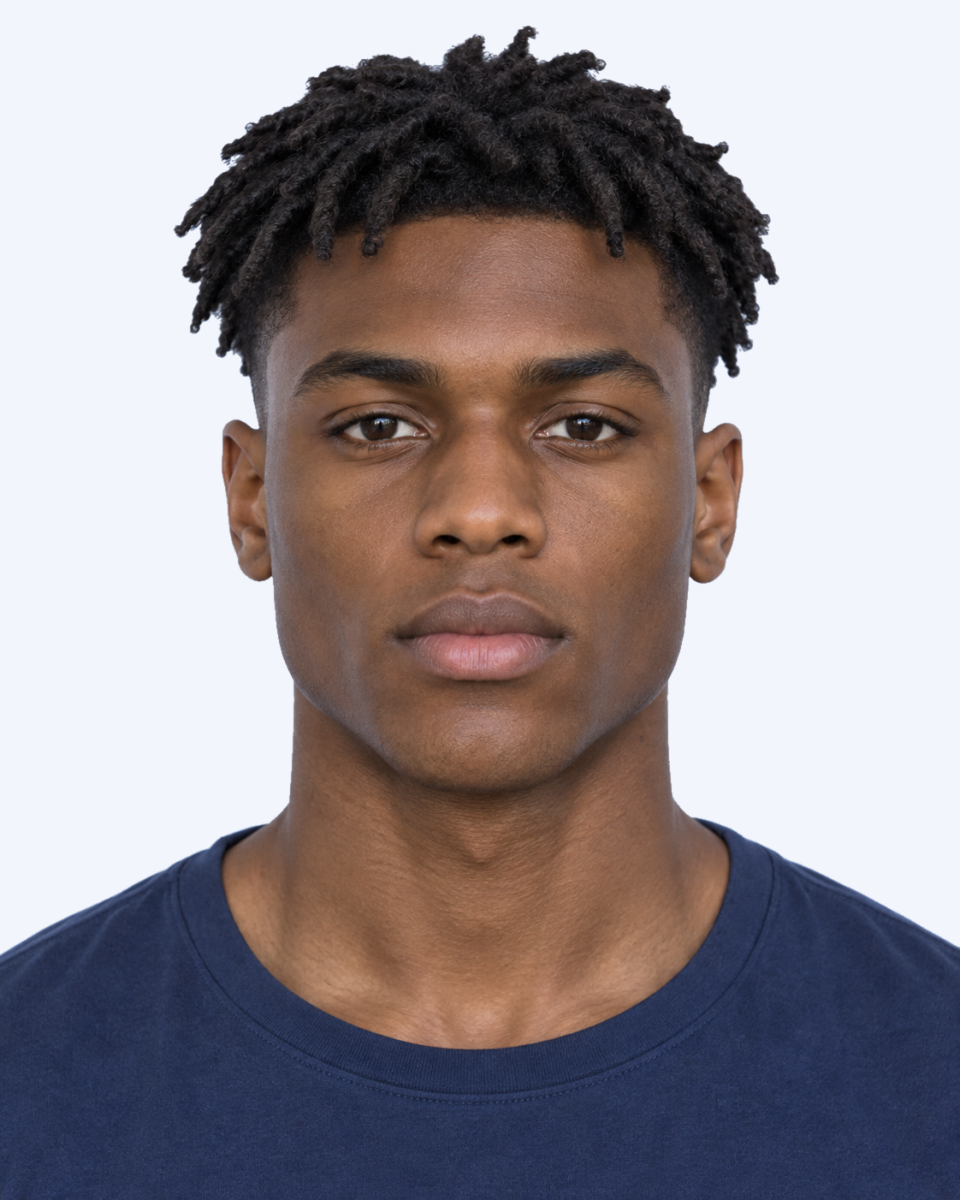
1.02 ratio
Neck width ratio
upper neck width divided by jaw-corner width.
The marked points show where we measure neck width ratio.
What different ratios look like
Compare the examples on either side with the original portrait in the centre.
Baseline comparison
Separation beneath the jaw
A neck that narrows beneath the jaw corners leaves a visible step inward on each side. This can make the jaw stand out even when its width is modest. As neck width approaches jaw width, the outline becomes more continuous and the corners may appear less distinct.
The denominator is the jaw, so this comparison concerns the transition immediately below the face. Broad jaw corners can create strong separation above a neck of ordinary width. A narrower jaw above that same neck can produce a much higher ratio and less visible separation.
The neck beneath different jaw shapes
When the cheeks, jaw and neck all retain substantial breadth, the lower outline can look broad throughout. A high neck-to-jaw ratio then continues the width already present in the face. With a narrow jaw, the same neck width creates more contrast: the face narrows below the cheeks, but the outline widens or stops narrowing where the neck begins.
A low ratio can also occur in different settings. Broad jaw corners above a narrow neck stand apart clearly, and a broad chin can complete a square lower face above that separation. Narrow corners above an even narrower neck create a finer outline overall. Their proportions may match while the impression of size differs.
The curve beneath the jaw
Neck width changes along its height. The sides may turn inward just beneath the jaw and broaden again towards the shoulders, or follow a straighter path. Necks with the same width at the marked level can therefore have different amounts of visible narrowing above and below it.
Gulsever and colleagues tested changes to this concavity in male and female silhouettes and found preferences among the contour options. Their measurement described the angle of an hourglass-like shape rather than a neck-to-jaw width fraction.
The side-view boundary beneath the chin adds different information. Clear separation at the jaw corners can coexist with a softer chin-to-neck contour in profile. Looking at both views distinguishes the lateral outline from the area directly under the chin.
Body proportions and posture
Neck muscle and other soft tissues contribute to its visible width. Shoulder breadth also affects how large the head and neck appear together, which is why a tight facial crop can give a different impression from a head-and-shoulders portrait. A width measurement alone cannot separate muscle from other tissue.
Posture can change the outline immediately. Raised shoulders, a turned head or a flexed neck alter the visible contour and may change where its width is marked. Use similar head and shoulder positions when comparing photographs, and measure at the same neck level each time.
The neck-width reference
The 0.90–1.05 reference describes neck width close to jaw-corner width. This tends to give a more continuous outline than a much narrower neck, although an inward curve beneath the corners can still create definition. A lower ratio makes that lateral step larger, especially beneath a broad jaw.
The contour experiment found preferences for particular shapes below the jaw, but it did not test this reference interval.
How we measure it
We compare the width across the top of the visible neck with the width between the jaw corners.
- 1
Mark the top of the visible neck contour on each side, just below the jaw.
- 2
Measure the horizontal width of the neck and the width between the jaw corners.
- 3
Divide neck width by jaw-corner width.
Getting a clear photograph
- Use a straight-on portrait with the camera near eye height and the head upright.
- Avoid close wide-angle selfies; perspective changes central features relative to the facial outline.
- Neck flexion, shoulder elevation and head extension change the visible lateral contours.
- High collars, hair and strong shadows can hide the upper neck contour.
Check the marked points
- Check that each neck point sits at the top of the visible side contour, below the jaw.
- Check the position of both jaw-corner points before comparing them with neck width.
- Retake with shoulders relaxed, neck upright and the collar clear of the measurement level.
Measure your neck width ratio
Upload a front-facing photograph to see your result and review the marked points.
Sources
- 1 The Influence of the Hourglass Form of the Neck on Perceptions of Frontal Esthetics
279 observers rated altered neck concavity in silhouettes. The study tests contour angle, not the app’s neck-to-jaw width ratio.
- 2 Glowometry front-view measurement protocol
Explains how the measurement is calculated and which reference range is used.
- 3 Reliability of measurements taken from facial photographs
Documents the effect of photographic setup and landmark placement on facial measurements.
- 4 Focal length affects depicted shape and perception of facial images
Shows that camera focal length changes depicted facial shape, measured proportions and attractiveness ratings.
Related guides
Bigonial width ratio
Jaw width relative to the cheekbones, from a tapered lower face to a broader outline.
Frontal jaw angle
The slope from the jaw corners to the chin, and how width and height affect the taper.
Chin width ratio
Chin width and its effect on the lower face, alongside chin height and jaw shape.