What your face shape describe
Face shape describes the outline relationship between face height, temple width, cheekbone width, jaw width, and chin taper.
What the result means
The label summarizes the broad outline pattern visible from the front-facing photo.
It does not describe attractiveness, age, gender, or ethnicity. It only groups measured proportions into a readable category.
How does it work
- 01
Glowometry places or detects landmarks around the temples, cheekbones, jaw, chin, hairline, and lower face.
- 02
The system compares face height with width at key horizontal levels.
- 03
Jaw width, chin taper, and cheekbone prominence are reviewed together rather than as a single measurement.
Labels you may see
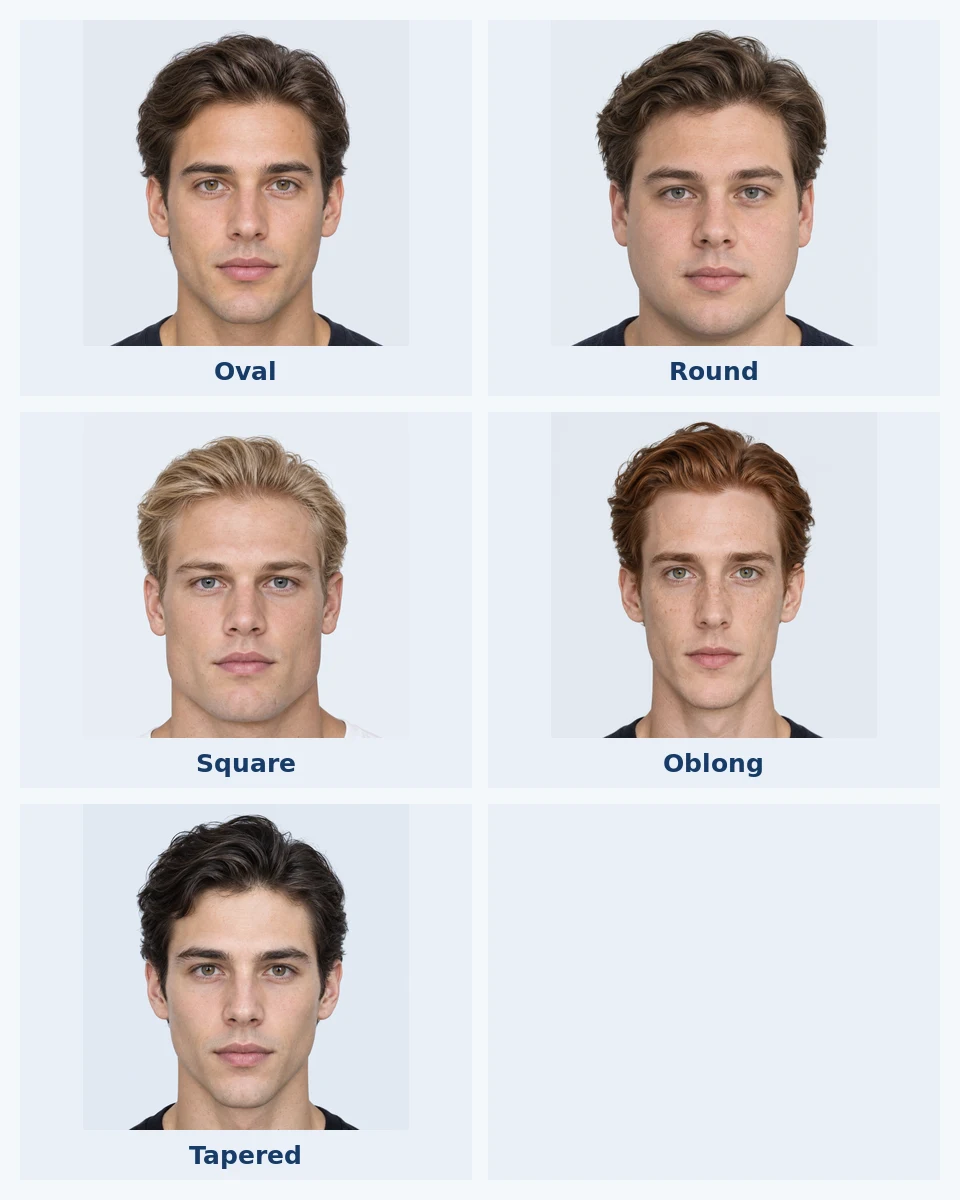
- Oval
- A gently tapered outline with balanced face height and width relationships.
- Round
- Softer width transitions with fuller cheek and lower-face contour in the front view.
- Square
- Jaw width and lower-face contour stay broad relative to cheekbone width.
- Oblong
- Face height is longer relative to width through the temple and jaw contour.
- Tapered
- Heart and diamond family patterns where the upper face or cheekbones stay broader while the jaw and chin narrow.
For a clearer result
- Use a straight-on photo with the camera at face height.
- Keep hair away from the temples, cheekbones, jawline, and chin when possible.
- Avoid wide-angle selfies taken very close to the face, which can widen the center of the image.
- Use a neutral expression so the jaw and lower-face contour are easier to read.
Ready to analyse your facial structure?
Upload a photo and explore your personalised analysis.