What your eye shape label describes
Eye shape describes visible eyelid contour, eye opening, and the relative tilt between the inner and outer corners.
What the result means
The label summarizes the visible outline and tilt of the eye area in the photo.
It can change with expression, gaze direction, eyelid tension, and whether the camera is above or below eye level.
How does it work
- 01
Inner and outer eye-corner landmarks establish the canthal line for each eye.
- 02
Upper and lower eyelid points describe the visible eye opening and contour.
- 03
Glowometry compares aperture height, taper through the corners, and the vertical difference between corners.
Labels you may see
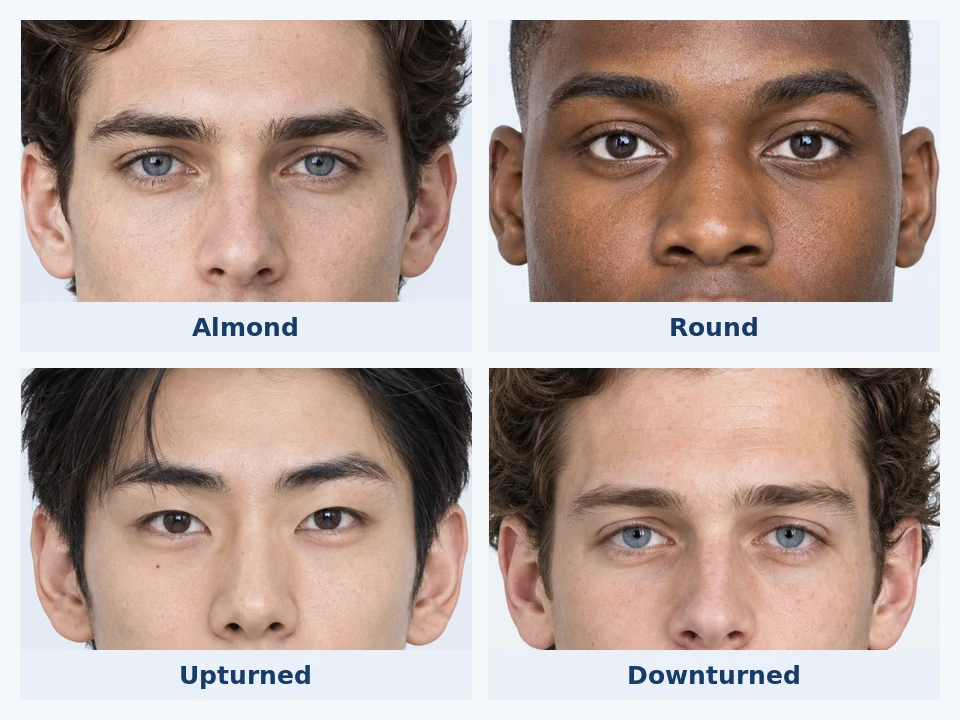
- Almond
- Tapered inner and outer corners with a balanced lid contour.
- Round
- A more open eye contour with visible height through the center.
- Upturned
- Outer corners sit slightly higher than inner corners in the uploaded photo.
- Downturned
- Outer corners sit slightly lower than inner corners in the uploaded photo.
For a clearer result
- Look straight toward the camera with a relaxed, natural gaze.
- Keep the camera level with the eyes to avoid exaggerating tilt.
- Avoid squinting, wide expressions, or looking up or down.
- Strong shadows, heavy eyeliner, or lashes crossing the eyelid edge can make contour detection less reliable.
Ready to analyse your facial structure?
Upload a photo and explore your personalised analysis.